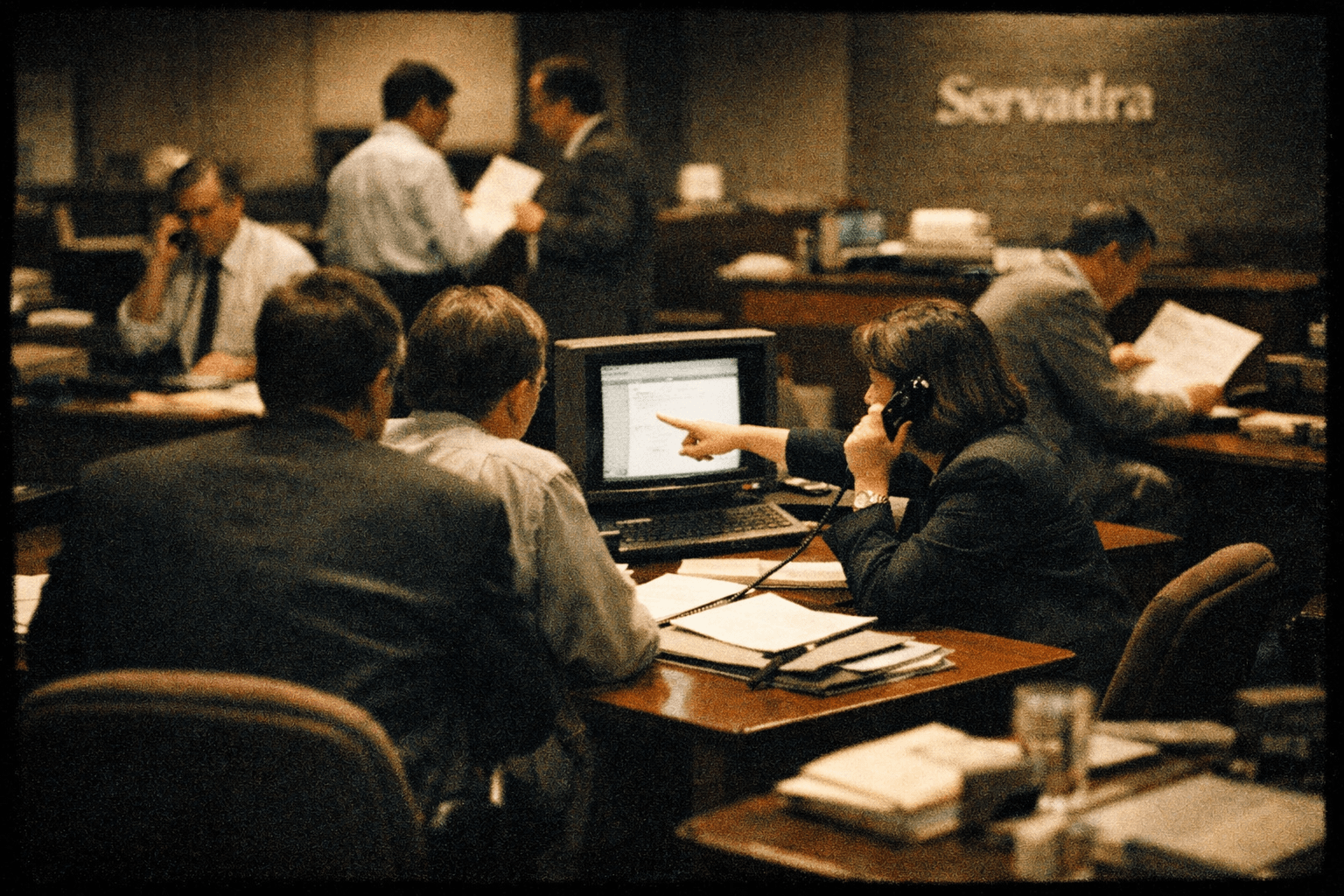
Operational Scenario
Documents That No One Can Find
When important knowledge exists across the business, but cannot be located with confidence when it is needed.
Background
Many organisations do not lack information.
They lack a reliable way to hold it in a shared and structured form.
Important documents may sit in old email threads, personal folders, message history, or private notes. Instructions may have been written once, but not stored where the wider team can find them. In some cases, the only real record sits in the memory of one dependable colleague.
This often feels manageable while the organisation remains small.
Over time, however, retrieval becomes slower and more uncertain.
Operational Situation
A team member needs to answer a routine question, confirm a past decision, or locate an operational document.
The answer probably exists somewhere.
But nobody is fully sure where the correct version sits.
Staff begin searching across inboxes, folders, chat threads, and past conversations. A simple operational task becomes a search exercise before any meaningful action can even begin.
Operational Friction
The immediate cost is delay.
The deeper cost is dependency.
Teams start relying on certain individuals because those people remember more, know where files are buried, or understand the background of past decisions.
Questions are answered more slowly. Internal interruptions increase. Confidence declines because people are no longer sure whether the information they found is complete or current.
The organisation ends up spending time recovering knowledge that it already owns.
Structural Intervention
A more stable operating model introduces shared documentation and clearer reference points.
Important instructions, recurring answers, and key decisions need a defined home.
The purpose is not to create unnecessary administration.
It is to reduce retrieval effort and make operational knowledge easier to access, maintain, and trust.
Shared reference points reduce dependence on memory and reduce the need to repeatedly involve the same individuals.
Operational Outcome
Information becomes easier to locate.
Questions are resolved with less disruption.
Teams act with greater confidence because they can find what they need without launching a manual search across the business.
The result is not merely tidier storage.
It is calmer operational movement.
Governance Note
Operational knowledge should belong to the organisation, not to private inboxes or individual memory.
Once knowledge is structured and shared, the organisation becomes easier to support, easier to trust, and less dependent on retrieval effort.