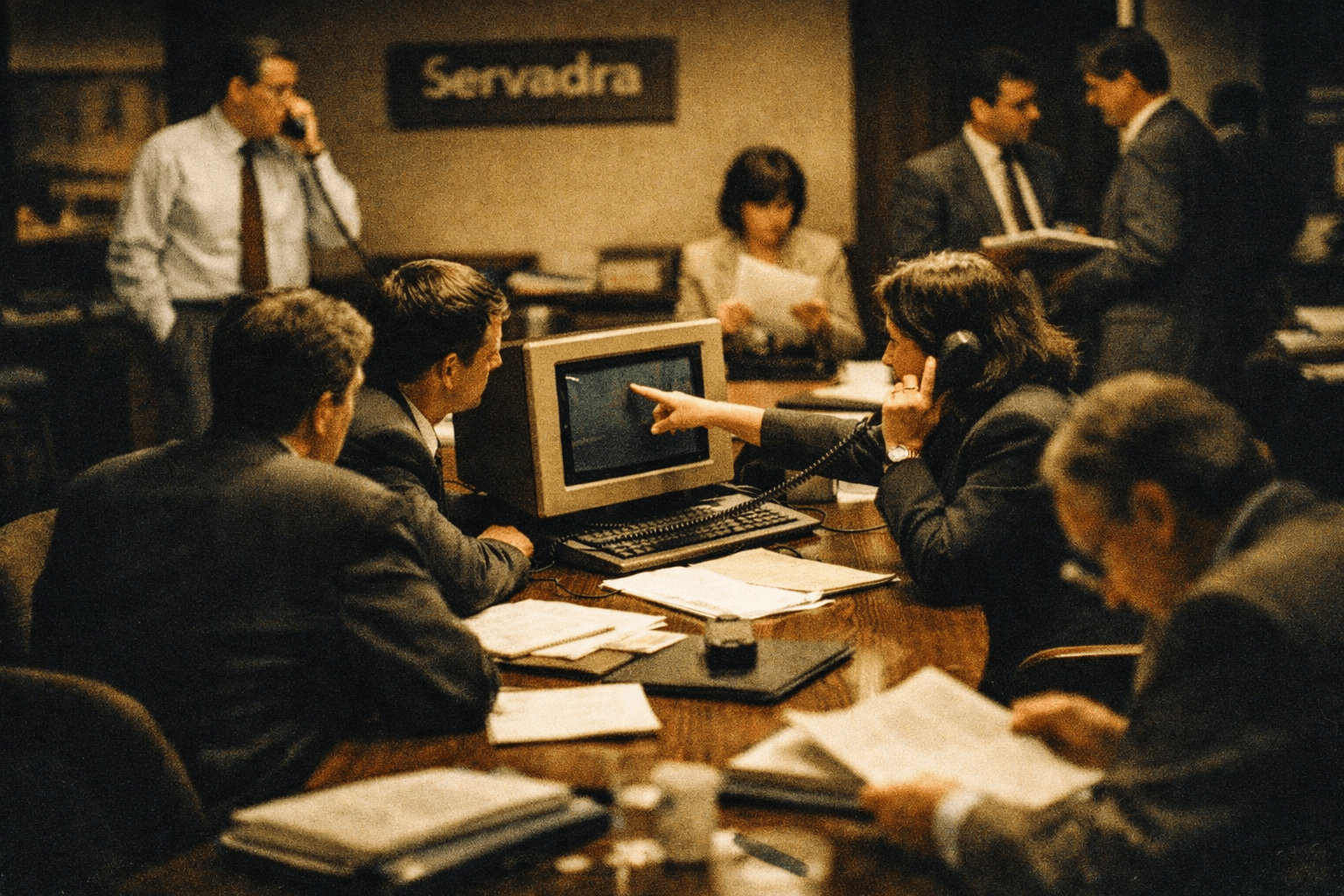
Auction coordination under time pressure
Operational Scenarios / SCN-AUC-001

Auction Coordination Under Time Pressure

When several people are involved, but no one fully owns the coordination.

In time-sensitive situations, communication often appears active long before it becomes structured.

Messages move. People respond. Updates are shared. Yet responsibility remains unclear.

The result is not always failure. More often, it is friction.

Scenario Summary

A time-sensitive transaction or decision is underway.

Several people become involved. One person speaks to the client. Another checks documents. Someone else tries to confirm figures, timing, or next steps.

Communication becomes active very quickly. But active communication is not the same as structured coordination.

At this point, the organisation often begins to depend on memory, speed and personal effort rather than a defined operational process.

What Usually Happens

At first, the situation appears manageable.

Messages are passed around. Calls are returned. Updates are given verbally. Someone says they are handling it. Another assumes a different part is already covered.

The client receives partial reassurance, but the internal picture remains incomplete.

Small gaps begin to form.

Who has the latest information. Who has confirmed the numbers. Who is waiting for approval. Who is expected to respond next.

Because the situation is moving quickly, these gaps are often tolerated rather than resolved.

Why Pressure Builds

Pressure builds because time exposes every weakness in coordination.

When responsibility is unclear, people hesitate. When updates are fragmented, decisions slow. When communication depends on individuals rather than a shared structure, the organisation becomes vulnerable to delay, duplication and omission.

No one may appear inactive. In fact, several people may be working quite hard.

But effort alone does not create order.

And under time pressure, the absence of order becomes visible very quickly.

The Structural Pattern Behind It

This scenario is rarely about competence.

It is usually about structure.

The organisation often lacks a clearly defined coordination layer. Communication is happening, but no single operational process is governing how information is gathered, confirmed, updated and handed over.

Without that structure, time-sensitive work begins to depend on informal judgement.

That may work once. It rarely works reliably.

The deeper issue is not that people are trying. It is that the organisation has not made coordination a defined operational function.

Why It Matters

Situations like this matter because they are often treated as isolated incidents.

In reality, they reveal a repeatable structural weakness.

When organisations grow, these moments become more frequent. More people are involved. More communication channels exist. More responsibility is shared.

Without clear operational control, the organisation begins to experience recurring coordination pressure in any situation where timing matters.

The cost is not always dramatic.

Often it appears as slower decisions, inconsistent updates, internal confusion, and growing dependence on particular individuals.

Closing Observation

Auction-style pressure is only one example.

The broader issue is familiar across many organisations.

When timing becomes sensitive, structure matters more than activity.

This is where operational coordination stops being an informal habit and starts becoming an operational requirement.